

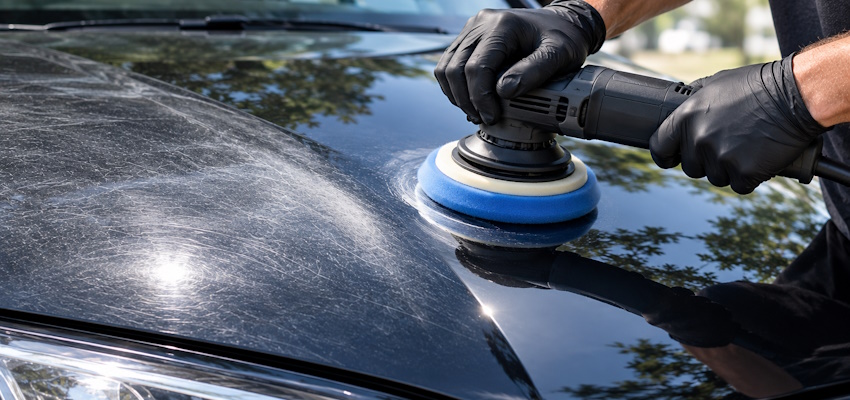
What Is Rubbing Compound? What It Does & When to Use It on Your Car
If you’ve noticed scratches, dull spots, or oxidation on your vehicle’s paint, you may have heard that rubbing compound can help restore its appearance. But what is rubbing compound, exactly, and how does it work?
Rubbing compound is a popular product used in automotive detailing to remove certain surface imperfections and improve the appearance of a vehicle’s paint. While it can be effective for correcting scratches, oxidation, and other blemishes, using it incorrectly can cause additional damage.
At M&M Auto Detailing, we understand how important it is to maintain your vehicle’s finish. In this guide, we’ll explain what rubbing compound is used for, how it works, and when professional paint correction might be the better option.
What Is Rubbing Compound?
Rubbing compound is an abrasive automotive product designed to remove a thin layer of paint or clear coat to help eliminate surface imperfections. It contains abrasive particles that smooth uneven surfaces, reducing the appearance of scratches, oxidation, water spots, and other paint defects.
Most modern vehicles feature several layers of paint protection, including a clear coat that sits above the colored base coat. Rubbing compound works by removing a small amount of this upper surface to create a more uniform finish.
Depending on the product, rubbing compounds range from relatively mild to aggressive. More aggressive compounds are typically used for deeper defects, while lighter compounds are designed for less severe imperfections.
Because rubbing compound physically removes material from the paint surface, it’s important to use it carefully and only when necessary.
What Is Rubbing Compound Used For?
One of the most common questions vehicle owners ask is, what is rubbing compound used for on a car?
Rubbing compound is primarily used during automotive paint correction to address visible imperfections in a vehicle’s finish.
1. Removing Light Scratches
Everyday driving, improper washing techniques, and contact with branches or other objects can leave scratches in your vehicle’s clear coat.
Rubbing compound can help remove or reduce the appearance of light scratches by leveling the surrounding clear coat.
However, scratches that penetrate through the clear coat and into the base coat or primer generally cannot be repaired with rubbing compound alone.
2. Correcting Paint Oxidation
Over time, exposure to sunlight, moisture, and environmental contaminants can cause automotive paint to lose its shine.
Rubbing compound can help remove surface oxidation from certain paint finishes, revealing a cleaner, more vibrant appearance underneath.
Severely deteriorated or failing clear coat, however, typically requires professional refinishing rather than compounding.
3. Reducing Swirl Marks
Swirl marks are fine circular scratches that often become visible when sunlight hits your vehicle’s paint.
These imperfections frequently result from improper washing, dirty towels, or automatic car washes.
Although rubbing compound can reduce swirl marks, a less aggressive finishing polish is often the better starting point for light defects.
4. Removing Certain Water Spot Marks
Water spots can develop when mineral-rich water dries on your vehicle’s exterior.
While many water spots can be removed through washing or chemical treatments, others may etch into the clear coat.
Rubbing compound can sometimes help correct shallow etching, although deeper damage may require additional paint correction.
5. Restoring Dull Paint
If your vehicle’s finish looks faded or lacks its original gloss, rubbing compound may help improve its appearance by removing surface defects.
It’s often followed by a finer polishing product to restore clarity and shine.
What Does Rubbing Compound Do to Car Paint?
Understanding what rubbing compound does is important before applying it to your vehicle.
Unlike waxes and sealants, which primarily protect or enhance the appearance of paint, rubbing compound is an abrasive correction product.
When applied to a painted surface, rubbing compound removes a microscopic amount of material to smooth out imperfections.
For example, imagine a shallow scratch in your vehicle’s clear coat. The scratch creates an uneven surface that reflects light differently from the surrounding paint.
Rubbing compound gradually levels the surrounding clear coat, reducing the visibility of the scratch and creating a smoother finish.
However, this process also means that repeated or overly aggressive compounding can reduce clear coat thickness and potentially cause permanent damage.
That’s why professional detailers carefully select compounds, polishing pads, equipment, and techniques based on the condition of each vehicle’s paint.
Rubbing Compound vs. Polishing Compound: What’s the Difference?
Although rubbing compound and polishing compound are sometimes used interchangeably, they generally serve different purposes.
| Rubbing Compound | Polishing Compound |
|---|---|
| Typically more aggressive | Typically less aggressive |
| Removes more noticeable surface defects | Refines lighter imperfections |
| May leave a hazy finish | Helps improve gloss and clarity |
| Often used during initial paint correction | Often used during finishing stages |
| Removes more clear coat material | Generally removes less clear coat material |
Modern automotive compounds vary considerably, and some advanced products combine cutting and finishing capabilities.
For many vehicles, a professional paint correction process involves compounding only where necessary, followed by polishing to achieve a smooth, glossy finish.
What Rubbing Compound for Car Paint Should You Use?
If you’re wondering what rubbing compound for car paint is best, the answer depends on your vehicle’s paint condition, the severity of the imperfections, and the type of finish.
There isn’t one rubbing compound that’s ideal for every vehicle.
Here are several factors to consider:
- Paint Condition: Vehicles with significant scratches or oxidation may require a stronger cutting compound, while those with minor swirl marks may benefit from a less aggressive polish.
- Clear Coat Thickness: Older vehicles or those that have undergone previous paint correction may have less clear coat available for safe correction.
- Application Method: Some compounds are designed for hand application, while others perform best with a dual-action or rotary polisher.
- Paint Hardness: Automotive clear coats vary in hardness, which affects how easily scratches can be corrected.
- Desired Finish: Aggressive compounds may require additional polishing to restore gloss and remove any haze.
When in doubt, start with the least aggressive product and method capable of addressing the defect.
How to Use Rubbing Compound on a Car
Although professional application is recommended for significant paint imperfections, some vehicle owners use rubbing compound for minor cosmetic corrections.
Here are the general steps involved.
Step 1: Wash and Dry the Vehicle
Begin by thoroughly washing the vehicle to remove dirt, dust, and other contaminants.
Applying rubbing compound to a dirty surface can drag debris across the paint and create additional scratches.
Step 2: Inspect the Paint
Examine the affected area under good lighting to determine the severity of the damage.
If the scratch extends through the clear coat or exposes primer or bare metal, rubbing compound won’t provide a complete repair.
Step 3: Choose the Appropriate Compound
Select a compound compatible with your vehicle’s paint and the intended application method.
Always follow the manufacturer’s instructions and test the product on a small, inconspicuous area first.
Step 4: Apply the Compound Carefully
Using a clean, appropriate applicator or polishing pad, work the product over a small section according to its instructions.
Avoid excessive pressure, aggressive rubbing, and prolonged polishing in one location.
Step 5: Inspect the Results
Remove the product residue with a clean microfiber towel and inspect the finish under adequate lighting.
Some compounds leave behind light haze that requires a finer finishing polish.
Step 6: Protect the Paint
Once the correction process is complete, consider applying a suitable wax, paint sealant, or ceramic coating to help protect the finish.
Important: Rubbing compound should not be applied indiscriminately to matte finishes, vinyl wraps, damaged clear coats, or freshly repainted surfaces. These finishes may require specialized care.
Can Rubbing Compound Damage Your Car’s Paint?
Yes. Although rubbing compound is designed to improve paint appearance, improper application can cause damage.
Some potential risks include:
- Clear Coat Thinning: Excessive compounding removes too much protective clear coat.
- Holograms and Buffer Trails: Improper machine polishing can leave visible patterns in the paint.
- Paint Burn-Through: Aggressive polishing, particularly near edges and body lines, can remove the clear coat entirely.
- Additional Scratches: Contaminated pads or dirty surfaces can introduce new imperfections.
- Uneven Finishes: Inconsistent application may leave certain areas looking hazy or dull.
These risks are especially important when working with older vehicles, previously repaired panels, or paint with unknown clear coat thickness.
Does Rubbing Compound Remove Deep Scratches?
Rubbing compound can improve the appearance of some scratches, but it cannot fix every type of paint damage.
A useful general guideline is that scratches limited to the upper clear coat are more likely to respond to compounding than scratches that penetrate deeper paint layers.
If a scratch catches your fingernail, it may be too deep for complete removal through compounding alone. However, this isn’t a definitive test.
Deeper scratches may require touch-up paint, wet sanding, or professional refinishing.
Attempting to remove a deep scratch through excessive compounding can do more harm than good.
Is Rubbing Compound the Same as Wax?
No. Rubbing compound and automotive wax serve very different purposes.
Rubbing compound is designed to correct paint imperfections through abrasion, while wax is primarily used to add a protective layer and enhance the appearance of the finish.
In simple terms:
- Rubbing compound corrects certain surface imperfections.
- Polish refines the finish and improves gloss.
- Wax or sealant protects the corrected surface.
Ceramic coatings can also provide longer-lasting protection when properly applied and maintained.
When Should You Consider Professional Paint Correction?
While rubbing compound can be useful for small cosmetic issues, some situations are better handled by an experienced automotive detailing professional.
Consider professional paint correction if your vehicle has extensive swirl marks, widespread oxidation, noticeable scratches, or an uneven finish.
Professional detailers can evaluate the condition of the paint and determine the appropriate level of correction.
Depending on the vehicle, the process may involve specialized compounds, machine polishing, and multiple finishing stages.
The goal is to improve the appearance of the paint while preserving as much of the original clear coat as possible.
Frequently Asked Questions About Rubbing Compound
What Is a Rubbing Compound for a Car?
A rubbing compound for a car is an abrasive detailing product used to reduce surface scratches, oxidation, and other imperfections in automotive paint. It works by removing a small amount of clear coat or paint to create a smoother finish.
What Does Rubbing Compound Do?
Rubbing compound smooths uneven paint surfaces by removing a thin layer of material. This can help reduce visible scratches, oxidation, and certain types of surface damage.
Will Rubbing Compound Remove Scratches Permanently?
When rubbing compound successfully removes a scratch through paint correction, the corrected defect is physically removed rather than temporarily covered. However, new scratches can develop over time, and deeper scratches may remain visible.
Can You Use Rubbing Compound on Clear Coat?
Yes. Many automotive rubbing compounds are formulated for use on clear-coated paint. However, aggressive or repeated use can thin the clear coat, so proper product selection and technique are essential.
Should You Wax Your Car After Using Rubbing Compound?
Yes, applying an appropriate protective product after compounding and finishing polish is generally recommended. Wax, sealant, or ceramic coating can help protect the corrected paint surface.
How Often Should You Use Rubbing Compound?
Rubbing compound should only be used when paint correction is necessary, not as part of routine car washing or maintenance. Because it removes material from the finish, repeated use can eventually compromise the clear coat.
Restore Your Vehicle’s Finish With M&M Auto Detailing
Understanding what rubbing compound is used for can help you make better decisions about maintaining your vehicle’s paint.
Although rubbing compound can be effective for correcting scratches, oxidation, and other surface imperfections, achieving professional-quality results requires the right products, equipment, and experience.
At M&M Auto Detailing, we understand that every vehicle’s paint is different. Whether you’re dealing with swirl marks, dull paint, or other cosmetic imperfections, professional detailing can help improve your vehicle’s appearance while minimizing the risks associated with improper paint correction.
Contact M&M Auto Detailing today to learn more about your vehicle’s detailing needs and available paint care services.